Early Retirement Planning Strategies for Financial Freedom
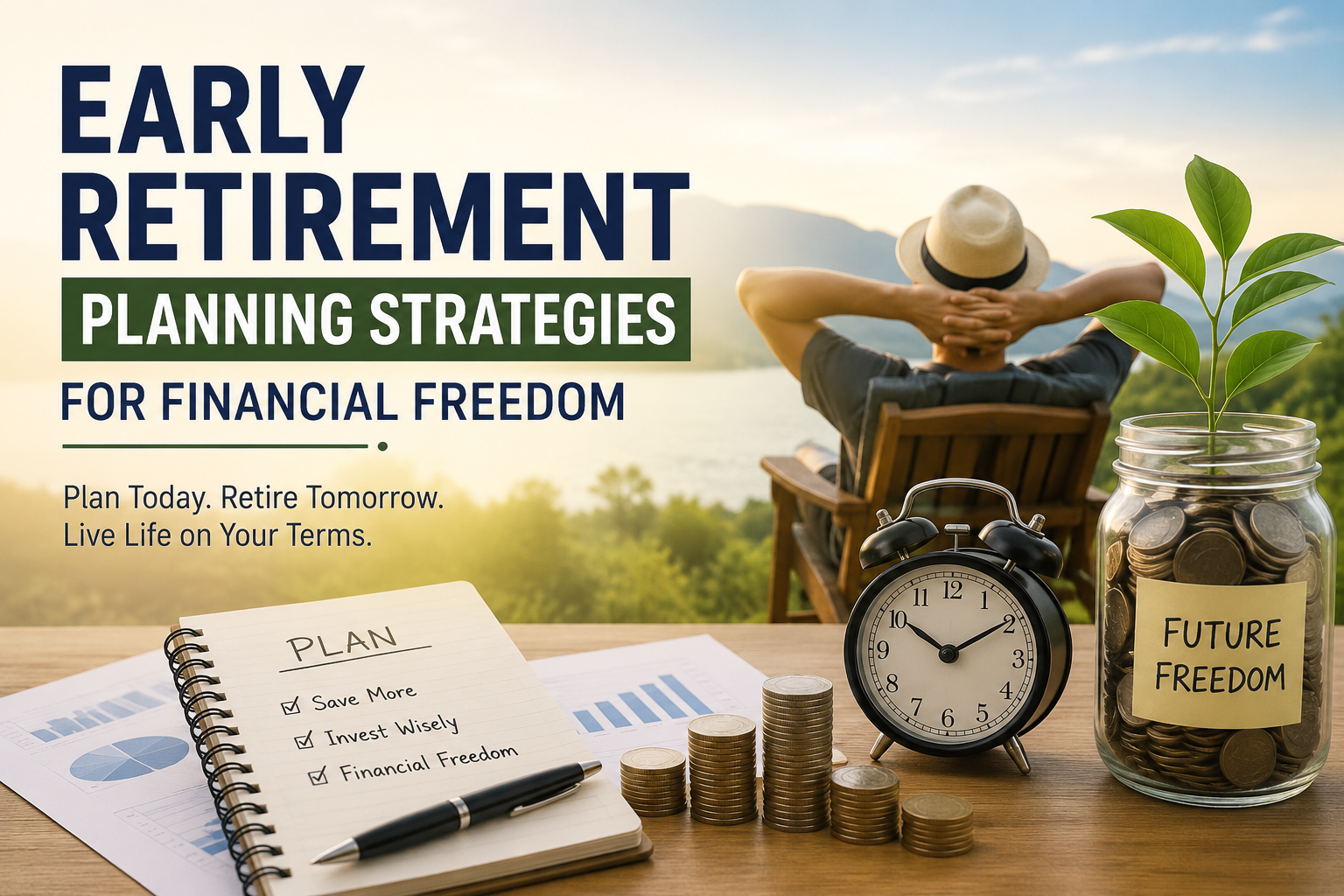
Retiring early is like a dream people whisper about, mostly for lottery winners or tech millionaires. But the reality is way more plain than all that. With the right early retirement planning strategies, a normal person with a normal paycheck can create a setup where work turns into optional, not something you’re forced into every day. And no, this isn’t tied to extreme luck or some magical outcome. It’s more about smart money management tips, a little patience, and having a plan you can actually follow, even when life gets messy.
If you’ve ever typed “how to retire in your 40s or 50s” and then got hit with spreadsheets, loud jargon, and this feeling that you’re behind, then this guide is for you. We’ll go through it in manageable pieces, starting with budgeting for beginners, and moving toward the more advanced saving and investing habits that quietly stack up over time.
What Are Early Retirement Planning Strategies?
Early retirement planning strategies are basically the personal financial routines, the concrete savings targets, and the investment decisions that let you leave work years, sometimes decades, before the usual retirement age of 65. Rather than just wishing it all turns out fine, these strategies lay down a roadmap: figuring out how much to save, where to park your money, and how to shield it from risk.
At their core, early retirement planning strategies rest on three simple pillars:
- Spend less than you earn (this is where budgeting for beginners comes in).
- Save and invest the difference consistently.
- Let time and compound growth do the heavy lifting.
None of this really needs a finance degree. It mostly needs consistency, and also willingness to learn how to save more money without turning your life into some miserable little marathon.
Sources
- IRS — contribution limits, employer matching and early withdrawal penalties
- SEC Investor.gov — compound interest calculator for modelling your own timeline
- Social Security Administration — how early retirement affects benefit timing
The 25x expenses guideline and 4% withdrawal convention are widely used planning heuristics drawn from published retirement research, not regulations. Your own number depends on spending, longevity, healthcare costs and market returns.
Last reviewed: 15 August 2026. Contribution limits change annually — we review this article when they do.
General information only, not personalised financial advice. Retirement planning depends heavily on individual circumstances, and investments can fall as well as rise. Consult a qualified professional about your own situation.
Why Money Management Tips Matter for Early Retirement?

Before you even think about investing accounts or retirement calculators, you really need a solid foundation. It’s like that everyday money management advice people ignore, until it’s too late. Think of it like building a house: you can’t jump over the foundation and go straight to decorating the living room. It’s the same thing here: no shortcuts, not with the basics, because if the base is shaky, then everything else gets wobbly too.
Good money management tips include:
- Tracking every dollar, at least for a few months, so you know exactly where your money goes.
- Automating your savings, so you are not relying on willpower every single month.
- Reviewing subscriptions and recurring bills every quarter to cut what you no longer use.
- Separating “needs” from “wants” so your spending reflects your actual priorities.
These habits might sound small, but they compound just like your investments do. A person who masters basic money management tips in their 20s or 30s often reaches financial independence years ahead of someone earning a higher salary but managing money poorly.
It helps to think of money management as a skill, not a personality thing. Nobody is naturally “good” or “bad” with money. People who handle money well simply build routines that make good decisions automatic. For instance, rather than relying on memory to pay bills on time, they set up autopay. Instead of hoping they will save “whatever is left” at the end of the month, they save first, then spend what remains. These little systems remove emotion from the whole equation, and emotion is usually what trips up a budget.
Another overlooked money management tip is checking your credit report and score from time to time. A strong credit record can lower the interest rates you pay on loans, which then frees up more money for saving and investing instead of paying interest to some lender.
Budgeting for Beginners: The First Step Toward Freedom
You can’t really map out an early exit from the workforce if you don’t know what is arriving and what is leaving, like how it all moves. That’s why budgeting for beginners is not optional at all. It’s the starting line, not some optional extra.
Here is a simple, beginner-friendly framework you can use immediately:
The 50/30/20 Rule (Adjusted for Early Retirement)
For most beginners, the classic advice is to split your income into 50% needs, 30% wants, and 20% savings. But if early retirement is really the goal, this ratio needs to shift a bit, like more in your favor. Lots of people who are working on early retirement planning strategies try to go with a 50/20/30 split instead: 50% needs, 20% wants, and 30% or more toward savings and investments.
At first this can feel pretty intense. Budgeting for beginners does not mean you must begin with 30% in savings on day one. It means starting somewhere, even 5% or 10%, then nudging it up every few months as your income grows, or as your everyday costs start shrinking.
Simple Budgeting Steps
- List your total monthly income after taxes.
- List every fixed expense (rent, insurance, loan payments).
- List variable expenses (groceries, entertainment, dining out).
- Subtract expenses from income.
- Direct the leftover amount toward savings and investments before you spend it on anything else.
This last step is often called “pay yourself first”; it is one of the most powerful money management tips you can find, and it fits naturally into any early retirement plan too.
A Simple Example
Imagine someone earning $4,000 per month after taxes. Under a beginner-friendly early retirement budget, this might look like:
- Needs (50%): $2,000 – Rent, utilities, groceries, insurance, minimum debt payments
- Wants (20%): $800 – Dining out, entertainment, hobbies, subscriptions
- Savings and investments (30%): $1,200 – Retirement accounts, index funds, emergency fund
At first glance, saving 30% of income might feel unrealistic. But budgeting for beginners isn’t about perfection right from day one. Someone could start with just 10% and then nudge the savings rate up by a percentage point or two every few months, especially once debts are handled or income climbs. The point is steady progress, not instant perfection.
It also helps to make sure every single dollar gets a task before the month begins, which is a method people often call a zero-based budget. When every dollar already has a job lined up in advance, for example rent, groceries, or savings, there’s less space for money to slip away quietly on little things you don’t really remember buying.
How to Save More Money Without Feeling Deprived?
A common myth is that early retirement means you have to live like a monk or something. But that’s not true. Learning how to save more money is less about deprivation and more about intention. It is spending on what actually matters to you, and trimming the stuff that does not.
Here are practical, realistic ways to save more money:
1. Automate Your Savings
Try setting up automatic transfers to a savings or investment account the very same day your paycheck lands. That way, it’s harder to get tempted to spend first and “save later,” which usually does not pan out.
2. Reduce Your Biggest Expenses First
Little cuts, like missing one coffee a week, make headlines but often don’t push the needle. Rather than that, focus on your three largest costs, typically housing, transit, and meals. A tiny reduction in those buckets can save more than removing every little “treat” completely.
3. Increase Your Income, Not Just Cut Spending
Learning how to save more money is not just about spending less; it’s more like everything together. You also have to think about making more, earning more. A side hustle, a skill-based freelance gig, or even talking for a raise can push your early retirement timeline forward way quicker than extreme frugality alone.
4. Avoid Lifestyle Inflation
As your income rises, resist that urge to upgrade the lifestyle at the same pace. Keep your expenditures steady while your earnings get higher, and it’s one of the swiftest ways to boost your savings rate.
5. Use High-Interest Savings Accounts
Instead of just letting emergency savings sit idle, put them into accounts that can earn real and meaningful interest. It’s a small but overlooked money management tip, and it seems minor at first, yet it adds up over the years.
6. Negotiate Recurring Costs
A lot of folks never think about negotiating insurance premiums, phone plans, or internet bills, but somehow providers often have room to offer a discount, especially if they want to keep a customer who already pays. One phone call, every year or two, where you compare a couple of quotes, and you politely request a better rate, can unlock real savings without trimming anything from your lifestyle.
7. Set a Specific, Visible Goal
Knowing how to save more money is only part of the challenge. Keeping yourself motivated is the rest of it. Like, when you name your goal, for example “retire by 50” or “reach 500,000 dollars by age 40,” and you then track progress visually, using an app, a spreadsheet, or even one plain chart taped on the wall, it starts to feel like you are moving forward toward something real.
Early Retirement Planning Strategies That Actually Work

Now that the foundation is in place- budgeting for beginners, better money management tips, and knowing how to save more money- it’s time to focus on the strategies that make early retirement seem realistic.
Calculate Your “Number”
Every early retirement plan starts with a target number: an “FI number” (Financial Independence number). A common rule of thumb is to multiply your expected annual expenses by 25. If you expect to spend $40,000 a year during retirement, then your target could be around $1,000,000 sitting invested. That’s usually tied to the idea that you can withdraw roughly 4% of your portfolio each year without burning through it too fast, assuming a long runway.
Now this number isn’t carved in stone. It should match your own expenses, your lifestyle, and where you live, not some generic average someone else pulled from. If you’re planning to retire in a low-cost-of-living area, you’ll likely need a far different figure than someone aiming for a major city. Going back over the number once a year, as your habits and goals shift, helps keep your early retirement plan grounded, not just theoretical.
Start Investing Early, Even in Small Amounts
When it comes to early retirement planning strategies, consistent investing is probably the most important and hard to beat. Because of compound growth, the money you put in during your 20s or 30s has decades to expand, and it often ends up beating bigger sums invested later on in life. Low-cost index funds are often used for this too, since they give wide diversification without you having to select individual stocks or anything like that. The SEC’s compound interest calculator is worth running with your own numbers to see what the timeline actually looks like.
Maximize Tax-Advantaged Accounts
Retirement accounts that come with tax benefits, like employer-sponsored retirement plans or individual retirement accounts, let your investments grow in a more efficient way. If you put money into these accounts regularly, particularly when your employer adds matching contributions, it becomes one of the simplest early retirement planning steps around. Current contribution limits are published by the IRS and change annually. It’s like free money, added straight into your savings, so it feels almost too straightforward.
Build Multiple Income Streams
Relying on just one paycheck can be risky for pretty much everyone, but for someone thinking about early retirement, it’s a bit more intense. Stuff like rental income, dividend-paying investments, freelance work, or even a small online business can add to your main income, sorta, and help you move up your timeline.
Pay Down High-Interest Debt First
Before aggressively investing, it usually makes sense to settle off the higher interest debt first, like credit card balances. The interest you save often ends up outweighing the usual investment returns, so paying down debt becomes one of the top “returns” you can realistically get in personal finance.
Plan for Healthcare Costs
One area folks often sort of overlook in the early retirement planning strategy is healthcare, because it’s not front of mind until later. If you’re retiring before you qualify for standard retirement-age health benefits, then, well, you’ll need a plan for medical expenses during the gap years. Looking into private insurance options or even using health savings accounts early on can help you avoid those annoying, unpleasant surprises later when the bills stack up.
Keep a Flexible Withdrawal Strategy
Markets can fluctuate, and a rigid withdrawal plan can leave you exposed when markets dip. A lot of early retirees end up tweaking their spending a bit in weaker market years, then pushing it a little higher during stronger years so their portfolio stays steadier over the long run. It’s like a more flexible budgeting rhythm instead of a strict fixed cadence.
Common Mistakes to Avoid
Even well-intentioned savers make errors that delay their early retirement goals. Being aware of these mistakes is part of solid money management:
- Underestimating expenses, especially healthcare, travel, or inflation over a long retirement.
- Being too conservative or too aggressive with investments, without adjusting as circumstances change.
- Neglecting an emergency fund, which forces people to sell investments at the wrong time.
- Ignoring inflation, which quietly erodes purchasing power over decades
- Comparing your journey to others, when everyone’s expenses, income, and goals are different.
Avoiding these pitfalls is just as important as following positive early retirement planning strategies.
Final Thoughts
Early retirement isn’t about “winning” the lottery or somehow having a six-figure salary. It’s more about using steady early retirement planning strategies and practicing simple money management tips, plus getting good at budgeting for beginners, then slowly improving so you can save even more money over time. Start small if you have to, seriously. The part that matters most is just starting.