Best ETFs for Beginners in 2026: The Smartest Way to Start Investing

When most people decide to start investing, they quickly run into the same problem: too many choices.
Should you buy individual stocks? Invest in real estate? Put your money into mutual funds? Try to find the next big technology company before everyone else does?
For beginners, this flood of information often leads to one of two outcomes. Either they become overwhelmed and never start investing, or they take unnecessary risks chasing quick returns.
Fortunately, there’s a simpler approach.
Exchange-Traded Funds, commonly known as ETFs, have become one of the most popular investment vehicles in the world—and for good reason. They offer diversification, low costs, and a straightforward way to participate in the growth of financial markets without needing to become a stock-picking expert.
If you’re looking for the smartest way to start investing in 2026, ETFs deserve your attention.
What Is an ETF?
An Exchange-Traded Fund (ETF) is a collection of investments packaged into a single fund that trades on a stock exchange.
Think of it like a basket.
Instead of buying shares in one company, you’re buying a basket that may contain hundreds or even thousands of different investments.
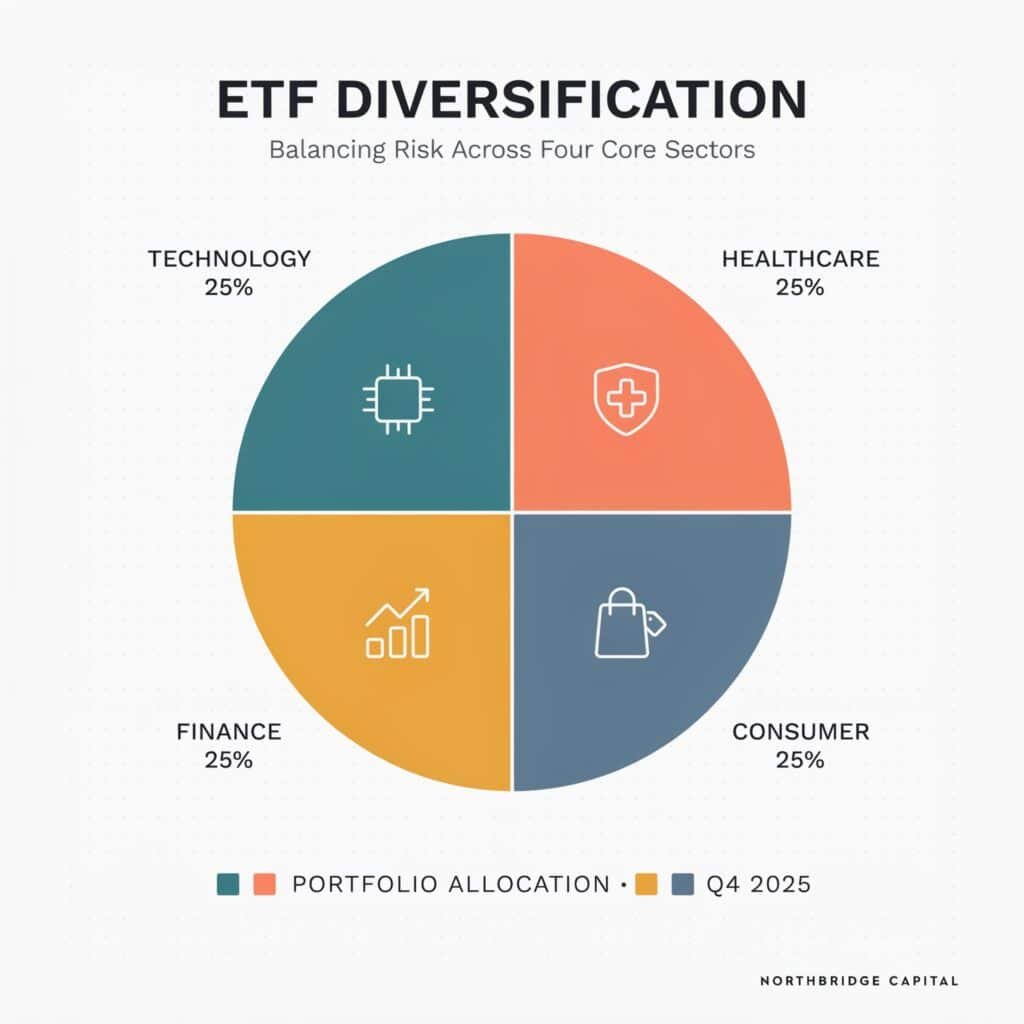
For example, an ETF that tracks the S&P 500 gives you exposure to many of the largest companies in the United States, including businesses across technology, healthcare, finance, consumer goods, and other sectors.
This means your investment isn’t dependent on the success of a single company.
If one company performs poorly, others in the fund may continue growing, helping reduce overall risk.
That’s one reason ETFs have become a favorite among long-term investors.
Why ETFs Are So Popular With Beginners
The biggest challenge for new investors isn’t finding opportunities.
It’s avoiding mistakes.
Many beginners spend weeks researching individual stocks, reading market predictions, and watching financial influencers on social media.
The problem is that even professional fund managers often struggle to consistently outperform the market.
Rather than trying to beat the market, many investors simply choose to own the market.
That’s exactly what broad-market ETFs allow you to do.
1. Instant Diversification
Diversification is one of the most important concepts in investing. As the SEC’s Investor.gov explains, spreading investments across many holdings helps reduce portfolio risk over time.
Imagine investing your entire savings into a single company.
If that company experiences financial problems, your portfolio could suffer significant losses.
Now imagine owning shares in 500 companies instead.
The success of your investment no longer depends on one business.
That’s the power of diversification.
Many ETFs provide exposure to hundreds of companies through a single purchase, making diversification incredibly simple.
2. Lower Costs
Investment fees may seem small at first glance.
A difference of one percent doesn’t sound significant.
However, over decades, fees can have a surprisingly large impact on your wealth.
One reason ETFs became so popular is that many of them have extremely low expense ratios.
This means more of your money stays invested and continues compounding over time.
For long-term investors, keeping costs low can make a meaningful difference.
3. Simplicity
One of the most underrated benefits of ETFs is simplicity.
Many beginners believe successful investing requires constant research and daily market monitoring.
In reality, some investors build substantial portfolios using only one or two ETFs.
Instead of spending hours analyzing earnings reports and stock charts, they focus on consistent investing and long-term growth.
4. Accessibility
Years ago, investing often required significant amounts of money.
Today, many brokerages allow investors to buy fractional shares.
This means you can begin investing with as little as $50 or $100.
For young investors and beginners, this accessibility removes one of the biggest barriers to getting started.
How ETFs Actually Make Money
A common misconception among new investors is that ETFs somehow generate returns differently than stocks.
In reality, ETFs make money through the performance of the assets they hold.
There are two primary ways investors may earn returns from ETFs:
Capital Appreciation
If the companies inside the ETF increase in value, the ETF itself generally rises as well.
For example, if the overall stock market grows over time, an ETF tracking that market is likely to appreciate.
Dividend Income
Some ETFs hold companies that regularly distribute dividends to shareholders.
These payments can provide investors with an additional source of return.
Dividend-focused ETFs are especially popular among investors seeking passive income.
The Difference Between ETFs and Individual Stocks
One question many beginners ask is whether they should buy ETFs or individual stocks.
The answer depends on your goals, risk tolerance, and experience level.
Let’s compare them.
Individual Stocks
Advantages:
- Potential for higher returns
- Ability to invest in specific companies
- More control over portfolio decisions
Disadvantages:
- Higher risk
- Requires more research
- Greater volatility
ETFs
Advantages:
- Broad diversification
- Lower risk compared to individual stocks
- Easier for beginners
- Minimal maintenance
Disadvantages:
- Less opportunity to outperform the market significantly
- Limited control over individual holdings
For most beginners, ETFs provide a more balanced starting point.
They allow investors to participate in market growth while reducing the risks associated with concentrating investments in a handful of companies.
What Type of ETF Should Beginners Choose?
Not all ETFs are the same.
Some focus on technology companies.
Others invest in dividends, bonds, real estate, or international markets.
For beginners, broad-market ETFs are usually the best place to start.
These funds provide exposure to large portions of the market and eliminate the need to predict which sector will outperform next.
When choosing your first ETF, ask yourself:
- Do I want exposure only to U.S. companies?
- Do I want international diversification?
- Am I focused on growth or income?
- How long is my investment timeline?
The answers to these questions can help determine which ETF best fits your financial goals.
A Lesson Many Investors Learn Too Late
One of the most common investing regrets isn’t losing money.
It’s waiting too long to start.
Many people spend years researching investments while keeping their money on the sidelines.
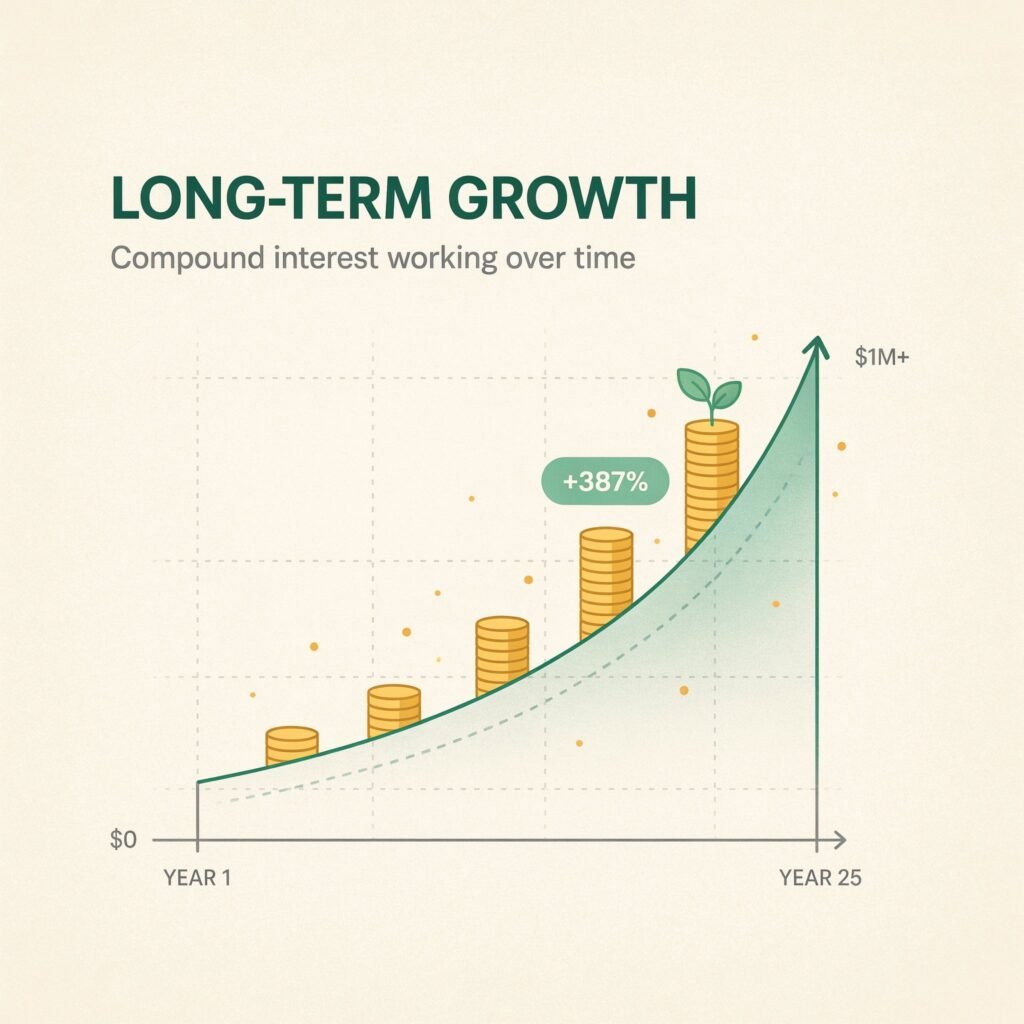
Meanwhile, investors who start early—even with small amounts—benefit from the power of compounding.
A person who invests consistently for twenty years often ends up in a much stronger financial position than someone who waits for the “perfect” opportunity.
The best ETF in the world won’t help if you never begin investing.
Getting started matters more than getting everything perfect.
The Best ETFs for Beginners in 2026
Now that we’ve covered the basics, let’s look at some of the most beginner-friendly ETFs available today.
These funds aren’t designed to be exciting.
They’re designed to be effective.
And in investing, boring often beats exciting.
1. Vanguard S&P 500 ETF (VOO)
VOO is one of the most popular ETFs in the world.
It tracks the S&P 500 Index, which includes 500 of the largest publicly traded companies in the United States.
When you invest in VOO, you’re buying exposure to businesses such as Apple, Microsoft, Amazon, NVIDIA, Alphabet, and many others.
Why beginners like it:
- Extremely low fees
- Broad diversification
- Strong historical performance
- Easy to understand
Many financial advisors consider VOO a solid foundation for a long-term portfolio.
2. Vanguard Total Stock Market ETF (VTI)
While VOO focuses on large companies, VTI takes things a step further.
It includes large-cap, mid-cap, and small-cap stocks from across the U.S. market.
In simple terms, VTI gives investors exposure to almost the entire American stock market.
Many investors choose VTI because they prefer maximum diversification without adding complexity.
Investors can review ETF expense ratios directly on the Vanguard website.
3. iShares Core S&P 500 ETF (IVV)
IVV is very similar to VOO.
Both track the S&P 500 and have nearly identical holdings.
For most beginners, choosing between VOO and IVV won’t significantly affect long-term results.
The key is choosing one and investing consistently.
4. Schwab U.S. Broad Market ETF (SCHB)
SCHB is another excellent low-cost option.
It provides broad exposure to U.S. equities while maintaining a very competitive expense ratio.
Investors who use Charles Schwab often find SCHB particularly convenient.
5. Vanguard Total World Stock ETF (VT)
Some investors want exposure beyond the United States.
That’s where VT stands out.
Instead of focusing on one country, VT includes companies from developed and emerging markets worldwide.
If you want a single ETF that provides global diversification, VT deserves consideration.
ETF Comparison Table
| ETF | Market Exposure | Diversification | Ideal For |
|---|---|---|---|
| VOO | Large U.S. Companies | High | Long-term investors |
| VTI | Entire U.S. Market | Very High | Maximum diversification |
| IVV | S&P 500 | High | Low-cost index investing |
| SCHB | Broad U.S. Market | Very High | Cost-conscious investors |
| VT | Global Market | Extremely High | International diversification |
If I Had $1,000 to Invest Today
A question beginners often ask is:
“What would you do if you were starting from scratch?”
There isn’t one perfect answer.
However, if I had $1,000 and wanted a simple long-term strategy, I’d focus on diversification rather than trying to find the next winning stock.
A possible approach could look like this:
| Investment | Allocation |
|---|---|
| VTI | 70% |
| VXUS or International Exposure | 20% |
| Cash Reserve | 10% |
This type of allocation provides exposure to thousands of companies around the world while maintaining flexibility.
The goal isn’t to get rich next month.
The goal is to build wealth steadily over many years.
Sample ETF Portfolios for Beginners
Conservative Portfolio
Suitable for investors who prefer lower volatility.
- 60% Stock ETFs
- 40% Bond ETFs
Balanced Portfolio
A mix of growth and stability.
- 80% Stock ETFs
- 20% Bond ETFs
Growth Portfolio
Designed for younger investors with long time horizons.
- 100% Stock ETFs
- Focus on broad-market funds
Remember that your ideal allocation depends on your age, goals, and risk tolerance.
iShares offers educational content that helps beginners understand ETF investing and portfolio diversification.

Common ETF Investing Mistakes
Even though ETFs simplify investing, beginners still make avoidable mistakes.
Trying to Time the Market
Many people wait for the “perfect” entry point.
Unfortunately, predicting short-term market movements is incredibly difficult.
Investing consistently often produces better results than trying to guess market tops and bottoms.
Chasing Hot Trends
Every year there’s a new investment trend attracting attention.
Whether it’s AI stocks, clean energy, or another fast-growing sector, investors often rush in after prices have already risen significantly.
Broad-market ETFs help reduce the temptation to chase trends.
Ignoring Investment Fees
Fees may look small on paper, but they compound over time.
Choosing low-cost ETFs can help maximize long-term returns.
Selling During Market Declines
Market corrections are normal.
Investors who panic and sell during downturns often lock in losses and miss future recoveries.
Historically, patient investors have been rewarded for staying invested.
The Real Secret Behind ETF Investing
Many people search for a magical investment strategy.
They want a shortcut.
The reality is less exciting.
Successful ETF investing usually comes down to three simple habits:
- Invest regularly.
- Keep costs low.
- Stay invested for the long term.
That’s it.
No complex formulas.
No secret indicators.
No daily market predictions.
Just consistency.
Over time, those simple habits can have a remarkable impact on wealth creation.
Final Thoughts
For beginners, ETFs offer one of the simplest and most effective ways to enter the investing world.
They provide diversification, low costs, and access to broad sections of the market without requiring extensive research.
Whether you choose VOO, VTI, IVV, SCHB, or VT, the most important decision isn’t selecting the perfect ETF.
It’s starting.
The sooner you begin investing consistently, the more time your money has to benefit from the power of compounding.
Years from now, you’ll likely be more grateful that you started than concerned about which ETF you chose first.
Sources
- SEC Investor.gov — how ETFs work, expense ratios and diversification
- FINRA — ETF risks and comparing fund costs
- IRS — tax-advantaged account rules and contribution limits
Expense ratios, holdings counts and fund data come from each provider’s own published documents and change. Historical performance figures don’t predict future returns.
Last reviewed: 15 August 2026. Fund costs and holdings change — we review this article when they do.
Frequently Asked Questions
What is the best ETF for a complete beginner?
Most beginners start with broad-market ETFs such as VOO or VTI because they offer instant diversification, low fees, and exposure to hundreds of companies through a single investment.
Are ETFs safer than individual stocks?
ETFs are generally considered less risky than individual stocks because they spread investments across many companies. However, they can still lose value during market downturns.
How much money do I need to start investing in ETFs?
Many brokers offer fractional shares, allowing investors to start with as little as $50 to $100. The most important factor is consistency rather than the amount you start with.
Can ETFs generate passive income?
Yes. Many ETFs pay dividends, which can provide passive income. Dividend-focused ETFs are particularly popular among income investors.
Should I invest in one ETF or several ETFs?
For many beginners, one diversified ETF is enough to get started. As your portfolio grows, you may choose to add additional ETFs for international exposure, bonds, or dividend income.
What is the difference between VOO and VTI?
VOO tracks the S&P 500, while VTI tracks nearly the entire U.S. stock market. VTI includes small- and mid-cap stocks in addition to large-cap companies.
Can I lose money investing in ETFs?
Yes. ETFs fluctuate in value based on market conditions. While they can reduce company-specific risk through diversification, they cannot eliminate market risk entirely.