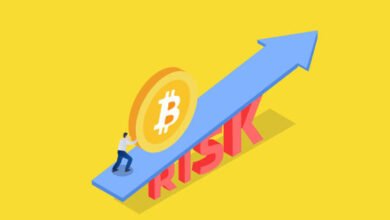
Investing in cryptocurrency safely isn’t mainly about picking the right coin. It’s about the setup — how much you allocate, where you buy, how you store it, and what records you keep. Get those right and a bad price call costs you money. Get them wrong and a good price call can still leave you with nothing.
Here’s the practical sequence, with the country-specific details that matter for investors in the US, UK, Canada and Europe.
Before you buy anything
Crypto belongs at the end of a financial checklist, not the start. In order:
- Emergency fund in cash. Three to six months of expenses. Without it, the first unexpected bill forces you to sell — usually at the worst moment. Our emergency fund guide covers sizing it.
- High-interest debt cleared. Paying off a card at 22% is a guaranteed 22% return. No crypto position offers that certainty.
- Employer pension or retirement match taken in full. Free money beats speculative money.
- Then, and only then, speculative assets.
This order isn’t conservatism for its own sake. Someone who buys crypto before building a cash buffer is statistically likely to sell it during a downturn to cover an emergency — capturing the loss and missing any recovery.
How much to allocate
The most useful test isn’t a percentage, it’s a question: could you watch this position fall 70% without selling, and without it changing your life?
Bitcoin fell roughly 50% from its October 2025 peak to its June 2026 low. That wasn’t unusual — several past drawdowns exceeded 70%. Any position sized for a calm market is mis-sized.
For most people the answer lands between 1% and 5% of investable assets. Enough to matter if it works, small enough that being wrong doesn’t affect your retirement.
Two hard rules: never borrow to buy crypto, and never use money earmarked for something within five years.
Choosing where to buy
Platform choice matters more than most beginners assume, because exchange failure has historically cost investors more than price falls.
United States. Exchanges register as money services businesses and comply with state-level licensing. The SEC’s Investor.gov publishes guidance on fraud patterns worth reading before you open any account.
United Kingdom. Crypto firms must register with the FCA for anti-money-laundering purposes. Check any platform on the FCA Register before depositing.
Canada. Trading platforms must register with provincial regulators and CIRO. Several international exchanges left rather than comply, so confirm a platform is registered to serve your province specifically.
Europe. The MiCA framework has brought EU-wide licensing requirements, though implementation varies by member state.
What to compare beyond regulation: total cost including the spread rather than the headline fee, withdrawal options, whether the platform lets you move assets off it easily, and how long it has operated.
What “regulated” doesn’t mean
Worth stating plainly, because the wording on exchange websites encourages the opposite belief.
Registration for anti-money-laundering purposes is not consumer protection. Crypto is not covered by FDIC insurance in the US, FSCS protection in the UK, or CDIC in Canada. Those schemes cover bank deposits.
Some exchanges advertise private insurance. That typically covers institutional custody breaches, not your individual account being compromised — and it isn’t a government guarantee.
The practical implication: don’t leave more on an exchange than you’d be comfortable losing if that company failed tomorrow.
How to actually buy
Buy regularly rather than all at once. Fixed amounts at fixed intervals means you purchase across a range of prices instead of one. It won’t get you the bottom, and it won’t leave you having bought everything at a peak — which is the failure mode that ends most people’s interest in the asset permanently.
Watch the spread, not just the fee. Beginner-friendly apps often advertise low or zero commission while building a wide margin into the price you receive. Compare the actual amount of crypto you get for a fixed sum across two platforms — the difference is sometimes several percent.
Start with a test transaction when moving funds anywhere new. A small fee beats losing the full amount to a mistyped address.
What to buy — and what to avoid
Most crypto losses come from the long tail, not from Bitcoin or Ethereum.
For a beginner, sticking to established assets with years of history, deep liquidity and major exchange listings removes most of the risk that isn’t simply price risk. Thousands of tokens exist; the overwhelming majority will not be here in a decade.
Be particularly wary of anything that arrives with momentum. The pattern is consistent: a real-sounding mission, borrowed credibility from a well-known institution, fabricated endorsements, and trading volume with no actual usage. Our analysis of how one hyped token actually played out walks through the anatomy.
Six questions worth asking about any token: Who is accountable for it? Does the idea need a token at all? Is there a working product or only a roadmap? Where does the volume come from? What does the promotion rely on? Who benefits if you buy?

Storage: the part that causes permanent losses
Price falls are recoverable. Lost keys aren’t.
The short version: keep small, actively traded amounts on a reputable exchange, and move anything you’d hate to lose into self-custody. Above a few thousand, a hardware wallet is cheap insurance.
Your recovery phrase is the actual asset. Written on paper or stamped into metal, stored in two separate physical locations, never photographed, never typed anywhere except your own wallet during setup or recovery. No legitimate service will ever ask for those words.
The full detail is in our guide to crypto wallets for beginners, which covers hardware options and the specific attacks that target wallet users.
Scam patterns to recognise
Guaranteed returns. Nothing in crypto generates a guaranteed yield. Any promise of fixed daily or weekly returns is describing something that cannot exist.
Romance and long-game investment scams. Someone builds a relationship over weeks, then introduces a trading platform that looks real, shows growing balances, and refuses withdrawals. These are among the highest-value frauds reported in all four markets.
Recovery scams. After a loss, someone offers to retrieve your funds for an upfront fee. This is a second theft targeting people already hurt.
Celebrity or corporate endorsements. Frequently fabricated, including deepfake video. Verify from the company’s own channels, never from the message.
Urgency. Limited windows, countdowns, “act now” framing. Legitimate investments do not expire in an hour.
Support contacting you first. Real support never messages you unprompted and never asks for your recovery phrase or remote access to your device.
Tax and records
This is where organised investors separate from disorganised ones, and it costs real money later.
In the US, UK, Canada and Australia, disposing of crypto is a taxable event — including swapping one crypto for another, which catches people constantly because no cash is received. Spending crypto on goods is also a disposal.
Record every transaction from the beginning: date, amount, value in your local currency, and fees. Exchanges close, export tools change, and reconstructing five years of trades later is expensive and miserable.
Losses may be usable against gains in most of these jurisdictions — but only if you documented them.
Frequently asked questions
Is cryptocurrency safe to invest in?
The asset is volatile and can fall 50% or more; that risk can’t be removed. What can be reduced is everything else — platform failure, theft, scams and tax problems — through the steps above.
How much should a beginner start with?
An amount you could lose entirely without changing your plans. For many people that’s a small monthly contribution rather than a lump sum.
Should I leave crypto on the exchange?
Small, actively traded amounts, yes. Long-term holdings, no. Exchange failures have cost investors more historically than market falls.
What if a platform I use shuts down?
There’s no deposit guarantee scheme covering crypto in the US, UK or Canada. Withdraw promptly if a platform announces restrictions, and don’t concentrate everything in one place.
The bottom line
Build the emergency fund and clear expensive debt first. Size the position so a 70% fall wouldn’t change your life. Use a platform registered in your own country, and don’t leave long-term holdings on it. Stick to established assets, buy regularly rather than in one go, and store the recovery phrase like the asset it is.
Then keep records from day one, and expect volatility rather than being surprised by it.
None of that predicts price, which is the point — nobody can. It just means the outcome depends on the market rather than on an avoidable mistake. For the behavioural side, see our guide to the most common crypto investing mistakes, and for the longer-term question, whether Bitcoin still works as a long-term holding.
Sources
- SEC Investor.gov — crypto fraud patterns and investor protection
- FCA Register — UK crypto firm registration for anti-money-laundering purposes
- IRS — taxable disposals, including crypto-to-crypto swaps
- ESMA — the MiCA framework across the EU
Platform fees, spreads and available features come from each exchange’s own published terms. Registration for anti-money-laundering purposes is not the same as consumer protection — that distinction comes directly from the regulators’ own wording.
Last reviewed: 15 August 2026. Crypto regulation is changing rapidly — we review this article when it does.
Information only, not investment advice. Cryptocurrency is highly volatile and you can lose your entire investment. Regulation and tax treatment vary by country and change — verify current rules with your regulator and a qualified tax professional.