
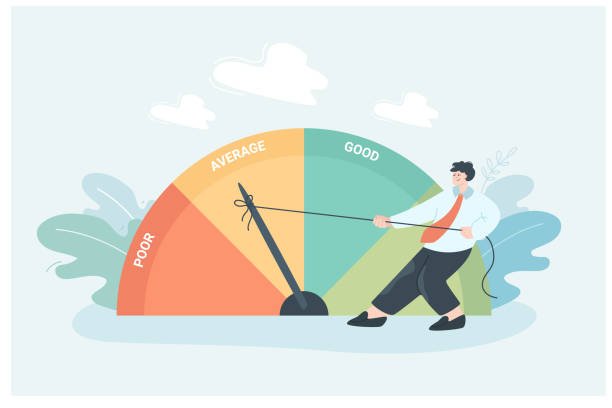
Most advice on how to improve your credit score fast is either useless or dishonest. “Pay your bills on time” is true and takes years. “Fix your score in 24 hours” is a scam pitch.
The truth sits in between. A few specific actions can move your score meaningfully in 30 to 60 days, because of how credit reporting actually works. Most other actions take a year or more, no matter what anyone promises. Knowing which is which is the whole game.
Here’s what genuinely works quickly, what doesn’t, and roughly how long each takes.
Why some changes are fast and others aren’t
Your score is recalculated whenever a lender pulls it, using whatever data your credit file holds at that moment. Lenders typically report to the bureaus once a month, usually on your statement closing date.
So anything that changes a current data point — your balance, an error on your file, your total available credit — can show up within one reporting cycle. Roughly 30 days.
Anything that depends on history — the age of your accounts, your record of on-time payments, a past default — moves slowly by design, because it’s measuring a track record. No technique compresses that.
That distinction explains everything below.
What each factor is worth
Using the standard FICO weighting, which most US lenders rely on:
| Factor | Weight | How fast it moves |
|---|---|---|
| Payment history | 35% | Slow — months to years |
| Credit utilization | 30% | Fast — 30 days |
| Length of credit history | 15% | Very slow |
| Credit mix | 10% | Slow |
| New credit / inquiries | 10% | Moderate — 3 to 12 months |
Look at row two. Utilization is nearly a third of your score and it’s the only heavyweight factor that responds within a single billing cycle. If you want speed, that’s where the work is.
Step 1: Find the errors on your report
Credit report errors are common — studies by consumer groups have repeatedly found meaningful error rates across files. A single wrongly reported late payment or an account that isn’t yours can cost you serious points.
You’re entitled to free reports. In the US, AnnualCreditReport.com is the only federally authorised source — check all three bureaus, because they often hold different data. In the UK, statutory reports are free from all three agencies. Canada and Australia both provide free access as well.
What to look for specifically:
- Accounts you don’t recognise (possible identity theft)
- Payments marked late that you made on time
- Balances that are wrong or already settled
- The same debt listed twice, once by the original lender and once by a collector
- Closed accounts still showing as open
Dispute anything wrong directly with the bureau. In the US they generally have 30 days to investigate; the Consumer Financial Protection Bureau publishes the process and will escalate complaints. Removing one incorrect late payment can be worth more than a year of good behaviour.
Timeline: 30–45 days. This is the single highest-return action available if you have an error, and you won’t know until you look.

Step 2: Attack your utilization ratio
Utilization is your balance divided by your credit limit. $3,000 owed on a $10,000 limit is 30%.
The conventional advice is to stay under 30%. That’s a floor, not a target. Scoring models generally reward lower, and people with the highest scores typically sit in the single digits. Moving from 60% to 10% can produce a substantial jump within one cycle.
Three ways to get there:
Pay before the statement closes, not before the due date. This is the most useful thing most people don’t know. Your card reports the balance on your statement closing date — not your due date. Pay someone who spends $2,000 monthly and clears it in full every month, and their file may still show $2,000 outstanding, because the balance was reported before they paid. Pay a few days before the statement closes instead and the reported balance drops, even though your actual spending hasn’t changed. Free points, one phone call to find out your closing date.
Ask for a limit increase. Raising your limit lowers utilization without paying anything down. Many issuers allow this online with a soft inquiry. Ask whether it’s a soft pull first — a hard inquiry costs a few points. And don’t treat the extra room as money to spend.
Spread balances across cards. Per-card utilization matters alongside your overall figure. One card at 90% while two sit empty looks worse than three cards at 30%.
Timeline: 30 days. This is the fastest legitimate lever that exists.
Step 3: Stop the bleeding on payment history
Payment history carries the most weight and moves the slowest, but there are still two useful actions.
If you’re currently late but under 30 days, pay immediately. Most lenders don’t report to bureaus until an account is 30 days past due. Inside that window you’ll likely owe a late fee but avoid the credit damage entirely.
If you’ve already been reported late and it’s genuinely a one-off on an otherwise clean account, ask for a goodwill adjustment. Call, explain the circumstances, ask them to remove the mark. It’s discretionary and often refused — but it costs one phone call and occasionally works.
Then automate. Set every minimum payment to auto-pay from an account that always has funds. You can pay more manually; automation exists to prevent the catastrophic miss, not to manage your finances.

If you have no credit history at all
Everything above assumes you have a file to improve. Plenty of people don’t — recent immigrants, young adults, and anyone who has lived on cash and debit. You can’t improve a score that doesn’t exist, and being invisible to lenders is treated much like being risky.
The fastest routes to establishing a file:
A secured credit card. You deposit a sum — often $200 to $500 — and that becomes your limit. Because the lender’s risk is covered, approval is straightforward with no history. Use it for one small recurring bill, pay it in full each month, and you’re building payment history immediately. Check that the issuer reports to all major bureaus, because some don’t, and a card that doesn’t report is useless for this purpose.
A credit-builder loan. Offered by many credit unions and some fintechs. The loan amount sits in a locked savings account while you make payments; you receive the money at the end. You’re effectively paying to build a payment record, and you get the savings back.
Rent and utility reporting. Several services report on-time rent and utility payments to bureaus. Coverage varies by country and not all scoring models count them, but it costs little and can help thin files specifically.
Authorised user status. As covered above, this works only if the primary account is long-standing, low-utilization and spotless. On a thin file it can be more useful than on an established one.
Expect roughly six months before most models will generate a score at all. There is no way to compress that — the models need a track record to assess, and a track record takes time by definition. Start now rather than when you need the score, because the moment you need it is the moment you can no longer build it.
What doesn’t work fast (despite the claims)
Opening new accounts to improve your credit mix. Mix is 10% of your score, and a new account triggers a hard inquiry and lowers your average account age. Net effect in the short term is usually negative.
Closing old credit cards. Extremely common mistake. Closing a card removes its limit from your utilization calculation, which pushes your ratio up overnight. If there’s no annual fee, keep it open and put a small recurring charge on it.
Credit repair companies. They dispute items on your behalf — something you can do free in twenty minutes. Any company promising to remove accurate negative information is describing something that isn’t possible.
Paying off a collection account. Worth doing for other reasons, but under older scoring models a paid collection can still sit on your file. Newer models treat paid collections more kindly, but don’t expect a paid collection to vanish.
Becoming an authorised user. This can help, but only if the primary holder has a long, spotless history and low utilization. On a mediocre account it does nothing, and on a bad one it can hurt. Some scoring models discount authorised-user accounts entirely.
How this works outside the United States
Scoring systems differ more than most guides admit, and applying US advice abroad can waste your effort.
United Kingdom. Three agencies — Experian, Equifax, TransUnion — each with their own scale, so there’s no single “credit score.” The electoral roll matters enormously here and has no US equivalent: registering to vote at your current address is one of the fastest, easiest improvements available. Lenders also weigh address stability heavily.
Canada. Equifax and TransUnion, scored 300–900. Similar mechanics to the US, though utilization guidance skews slightly stricter — under 30% is treated as more of a hard line than a suggestion.
Australia. Comprehensive Credit Reporting means your repayment history for the past two years is visible to lenders in detail, including exactly which months you paid on time. That makes recent consistency more valuable, and recent slips more visible, than in most other markets.
Europe. Highly variable. Germany’s SCHUFA is dominant and notoriously opaque; France has no consumer credit score at all, relying instead on a central register of payment incidents. Advice about “utilization ratios” simply doesn’t apply in some of these markets.
A realistic timeline
| Action | Realistic impact | Time |
|---|---|---|
| Pay down utilization to under 10% | Significant | 30 days |
| Remove a reporting error | Can be large | 30–45 days |
| Credit limit increase | Moderate | 30 days |
| Pay before statement date | Moderate | 30 days |
| Register on electoral roll (UK) | Moderate | 30–60 days |
| Six months of on-time payments | Steady gain | 6 months |
| Hard inquiry ages off | Small | 12 months |
| Late payment ages off | Gradual | Up to 6–7 years |
If you’re applying for a mortgage or a loan soon, work backwards from that date — there’s a specific sequence worth following in the six months before you apply, and timing your applications badly can undo months of work.
Frequently asked questions
How fast can a credit score realistically improve?
With high utilization or a reportable error, meaningful movement in 30–60 days is realistic. Recovering from a default or bankruptcy takes years. Anyone promising a specific number in a specific timeframe is guessing or selling.
Does checking my own score damage it?
No. Checking your own file is a soft inquiry and has no effect. Only lender applications create hard inquiries.
Should I pay off my card completely or leave a small balance?
Pay it in full. The idea that carrying a balance helps your score is a persistent myth that costs people real interest. A zero balance reports fine.
Will a rejected application hurt me?
The hard inquiry counts against you slightly; the rejection itself isn’t reported. This is why you should check eligibility with soft-search tools before formally applying — a habit worth building alongside avoiding the common credit card mistakes that quietly drag scores down.
The bottom line
If you want to know how to improve your credit score fast, the honest answer is that two things move quickly and everything else doesn’t.
Get your utilization down — pay before the statement date, request a limit increase, spread balances. And check your report for errors, because a single wrong entry can outweigh a year of careful behaviour.
Do those two things this month and you’ll see movement in the next cycle. Everything else on the list is worth doing, but it’s a matter of consistency over time, and no shortcut exists. Anyone telling you otherwise is selling something.
Sources
- FICO — the scoring factor weightings, including utilization at roughly 30%
- Consumer Financial Protection Bureau — disputing errors and the 30-day investigation window
- AnnualCreditReport.com — the federally authorised source for free US reports
- GOV.UK — electoral roll registration, a fast UK-specific improvement
The statement-date reporting mechanic reflects standard issuer practice rather than a rule — individual issuers may report on different cycles. Score improvement timelines are typical rather than guaranteed.
Last reviewed: 15 August 2026. Scoring models and reporting practices change — we review this article when they do.
General information only, not personalised financial advice. Credit scoring systems and consumer rights differ by country. Check the rules that apply where you live before acting.