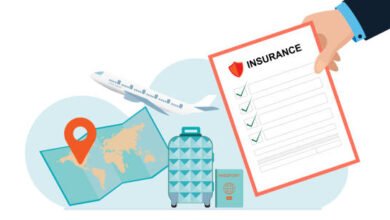
Travel insurance for European travellers gets skipped more than almost any other cover, usually for one reason: people assume their European Health Insurance Card handles it. It doesn’t, and the gap between what the card covers and what a medical emergency abroad actually costs is where families get financially wrecked.
Two things have also changed at European borders recently, which affect trip planning even though they aren’t insurance. Both are covered below.
What your EHIC or GHIC actually covers
The European Health Insurance Card gives you access to state-provided healthcare in EU and EEA countries and Switzerland, on the same terms as a local resident. UK travellers now hold the Global Health Insurance Card, which works similarly across the EU.
That’s genuinely valuable, and you should carry one. But note the limits carefully:
- State healthcare only. If an ambulance takes you to a private clinic — which happens in tourist areas and ski resorts routinely — the card doesn’t apply.
- Same terms as a local means you pay whatever locals pay. In countries with co-payments, you pay them too.
- No repatriation. This is the big one. Medical repatriation to your home country can cost tens of thousands of pounds or euros. An air ambulance costs far more. The card covers none of it.
- No cancellation, baggage, or missed departure cover.
- Nothing outside the covered countries, which matters for trips combining EU and non-EU destinations.
So the card reduces your medical bill. Travel insurance covers getting you home, and everything else that goes wrong.
What changed at Europe’s borders
The EU’s Entry/Exit System became fully operational across the Schengen Area on 10 April 2026. Non-EU travellers — including UK, US, Canadian and Australian passport holders — no longer receive passport stamps. Instead, your fingerprints and a facial image are registered on your first crossing.
Practically, this means longer queues, particularly at peak times. The system’s first summer produced multi-hour waits at some major airports. There’s an optional “Travel to Europe” app allowing pre-registration of passport and biometric data within 72 hours of arrival, though availability varies by country.
The insurance angle is real: tighter connections and missed departures become more likely when border processing takes longer than it used to. If your policy has a missed departure clause, check what it requires.
ETIAS has not launched. Official EU guidance has pointed to the last quarter of 2026, but reporting in July 2026 indicated a further delay into 2027, with the agency responsible reportedly concluding a 2026 launch is no longer feasible. When it does arrive, it will cost €20, last three years or until your passport expires, and apply to visa-exempt travellers visiting 30 European countries.
Critical warning: because ETIAS isn’t live, any website currently accepting ETIAS applications is fraudulent. Only official EU domains will handle it. Verify current status at the EU’s official travel site rather than commercial lookalikes.
What travel insurance should cover
| Cover | What to look for |
|---|---|
| Emergency medical | Several million in cover; Schengen visa applicants need at least €30,000 |
| Repatriation | Included, with 24-hour assistance line |
| Cancellation | Enough to cover your actual prepaid costs |
| Curtailment | Cutting a trip short, usually for family emergency |
| Baggage and belongings | Check single-item limits, often £200–£500 |
| Missed departure | Increasingly relevant with longer border queues |
| Personal liability | If you injure someone or damage property |
| Legal expenses | Useful, frequently overlooked |
The headline medical figure matters less than whether repatriation and a 24-hour assistance line are included. That assistance line is what actually organises help when you’re in a foreign hospital and don’t speak the language.
The exclusions that catch people out
Undeclared pre-existing conditions. The single most common reason claims are refused. You must declare medical conditions, including ones you consider resolved or trivial, and including those of anyone whose illness might cause you to cancel. Insurers request medical records when large claims arrive.
Winter sports. Not covered by standard policies. Skiing and snowboarding need a specific add-on, and off-piste skiing is frequently excluded even then. Mountain rescue in the Alps is billed to the individual and is not cheap.
Alcohol. Injuries sustained while intoxicated are commonly excluded. Insurers do ask, and hospital records mention it.
Adventure activities. Quad biking, scuba diving, paragliding and similar usually need declaring. So does moped and scooter hire — extremely common on Mediterranean holidays, and often excluded unless you hold the appropriate licence and wore a helmet.
Unattended belongings. Bags left on a beach or a café chair are typically excluded, and most policies require a police report within 24 hours for theft claims.
Travelling against official advice. If your government advises against travel to a destination, cover is usually void.

Single trip, annual, or already covered?
Single trip suits one holiday a year. Cheapest per trip.
Annual multi-trip generally pays for itself from two or three trips. Check the maximum trip duration — usually 17 to 31 days — since longer stays fall outside cover entirely.
Packaged bank account cover comes with many premium current accounts, and plenty of people pay for insurance they already hold. Before buying, check yours — then check three things: the upper age limit, whether pre-existing conditions are covered, and whether it includes winter sports.
Credit card cover is usually narrower than a standalone policy and often requires you to have paid for the trip with that card.
Buy it when you book, not before you fly
This is the most common expensive mistake.
Cancellation cover starts the day you buy the policy. If you book a holiday in January for July and buy insurance in June, you have no cancellation protection for those five months — precisely the window in which something might go wrong.
Buy the policy the same day you book the trip. The premium is identical; the cover period is months longer.
Flight delays: insurance versus EU261
Worth separating two things people conflate.
EU261 is regulation, not insurance. It entitles passengers to compensation for long delays and cancellations on flights departing the EU, or arriving in the EU on an EU carrier, when the airline is responsible. You claim directly from the airline, free of charge.
Travel insurance delay cover typically pays a modest fixed amount after a set number of hours, and is separate from any EU261 entitlement.
Claim both where applicable. Also be aware that no-fee claims companies take a substantial cut of EU261 compensation you could have claimed yourself in twenty minutes.
Notes for travellers from outside Europe
United States. No EHIC equivalent, and domestic health insurance often provides limited or no coverage abroad. Medicare generally doesn’t cover care outside the US. Travel medical insurance is close to essential.
Canada. Provincial plans cover very little outside Canada, and the shortfall on a serious hospital stay can be substantial. Many Canadians rely on credit card cover without checking its trip-length limits.
Australia. Reciprocal healthcare agreements exist with several European countries, but they’re narrower than the EHIC and don’t include repatriation — which is a long and expensive flight from Europe.
Within Europe. Even with an EHIC, repatriation and cancellation remain uncovered. The card reduces the medical bill; it doesn’t replace the policy.
Frequently asked questions
Do I need travel insurance if I have an EHIC or GHIC?
Yes. The card covers state medical treatment only — not repatriation, cancellation, baggage or private care.
Does travel insurance cover trip cancellation for any reason?
No. Standard policies list specific covered reasons — illness, injury, bereavement, jury service and similar. “Cancel for any reason” cover exists separately and costs considerably more.
Am I covered if I get ill before travelling?
If the condition is covered and wasn’t pre-existing, cancellation cover usually applies — provided you bought the policy before the illness arose.
What about pregnancy?
Most policies cover unexpected complications but exclude routine pregnancy, and many restrict cover beyond a certain number of weeks. Airlines have their own separate rules.
The bottom line
Carry your EHIC or GHIC, and buy travel insurance anyway. They do different jobs, and the one they don’t share — getting you home when you can’t fly commercially — is the expensive one.
Buy the policy the day you book. Declare every medical condition, including the ones you think don’t matter. Check winter sports and moped hire specifically if either applies. And if a serious claim would strain your finances even with cover in place, that’s a wider signal worth acting on — see our guides to reducing insurance costs and building an emergency fund that can absorb an excess.
Sources
- European Union — the Entry/Exit System and ETIAS timelines
- NHS — what the GHIC and EHIC actually cover, and what they don’t
- GOV.UK travel advice — travelling against official advice voids most policies
- Association of British Insurers — travel cover guidance and claims data
Schengen visa insurance requirements come from EU visa rules. Policy exclusions, waiting periods and cover limits come from individual insurers — read the policy wording before travelling.
Last reviewed: 15 August 2026. EU border rules and ETIAS timelines have shifted repeatedly — we review this article when they change.
General information only, not personalised advice. Border requirements, ETIAS timelines and healthcare agreements change — verify current rules on official government sites before travelling. Read your policy wording in full.