Bitcoin ETFs and Market Impact: How Fund Flows Now Move the Price

Spot Bitcoin ETFs were supposed to be the thing that made Bitcoin boring — a regulated wrapper, held in an ordinary brokerage account, no private keys to lose. What actually happened is stranger: the funds became a mechanism that now helps set the price itself.
In 2026 that mechanism ran in reverse for the first time, and the effect was visible in the price within weeks. Here’s how it works and what it means for anyone holding Bitcoin in any form.
What a spot Bitcoin ETF actually does
When you buy shares in a spot Bitcoin ETF, you’re not buying Bitcoin. You’re buying shares in a fund that holds Bitcoin on your behalf, with a custodian — Coinbase Custody, for most major US funds — holding the actual coins.
The important part is the creation and redemption process. When demand for shares rises, authorised participants buy Bitcoin on the spot market and deliver it to the custodian in exchange for new shares. When investors sell, the reverse happens: the custodian sells Bitcoin on the spot market to return cash.
That’s the whole thing. It sounds like plumbing, and for most funds it is. For Bitcoin it turned out to be structural.
Why fund flows now move the price
Research cited across 2026 ETF coverage estimates that ETF flows now explain roughly 45% of weekly Bitcoin price movement.
Sit with that number. Nearly half of what Bitcoin does in a given week is attributable not to sentiment, adoption, or macroeconomics directly — but to the mechanical consequence of money entering or leaving a handful of funds.
When outflows ran for ten consecutive sessions in late June and early July 2026, that translated into more than a billion dollars a week of systematic, rule-driven selling into the spot market. Not one trader deciding Bitcoin was overvalued. Just redemptions producing sales, automatically.
This cuts both ways, and it’s why early July’s reversal mattered: $510 million of inflows across three sessions, ending the streak. The same machinery that had been selling started buying.

What happened to ETF flows in 2026
The funds launched in January 2024 and accumulated roughly $58.7 billion in cumulative net inflows over the following two years. 2026 broke the pattern.
| Period | What happened |
|---|---|
| Jan–Feb 2026 | Redemptions on profit-taking and macro uncertainty |
| March–April | Recovery; April alone drew ~$2bn, Bitcoin rose ~12% above $80,000 |
| May | Sharp reversal; multi-day outflow streaks |
| June | Roughly $4bn out — the worst month on record |
| May + June combined | ~$7.2bn across two record streaks |
| Result | 2026 year-to-date flows turned negative for the first time since launch |
| Early July | Partial reversal, $510m over three sessions |
Aggregate assets across the funds fell from roughly $104 billion to around $80 billion as Bitcoin slid toward its 21-month low. Bloomberg’s ETF analysts confirmed the year-to-date figure going negative — a first for these products.
Worth keeping in proportion: $7.2 billion against a $58.7 billion cumulative base is a meaningful withdrawal, not an exodus. And through the same period, on-chain data showed large direct holders accumulating. The people leaving were largely in the wrapper, not in the asset.
The concentration problem
The ETF market is not evenly distributed. BlackRock’s iShares Bitcoin Trust dominates to the point where analysts describe it as winner-take-most, with Fidelity’s fund a distant second and everyone else supporting.
IBIT absorbed roughly $3.3 billion of the 2026 outflows — the heaviest share by far — and posted its worst week since inception. On the way back up, it accounted for the bulk of the July inflows too.
This concentration creates a real dependency. When one fund’s flows drive a large share of the category, and the category drives a large share of weekly price action, Bitcoin’s short-term price becomes unusually sensitive to the allocation decisions of a relatively small number of institutional desks.
Grayscale’s older trust, meanwhile, has bled steadily for multiple quarters — mostly a fee story, as holders migrate to cheaper alternatives. That’s ordinary ETF competition, not a Bitcoin signal, and it’s often misread as one.
What the ETFs genuinely changed
Access. Pension funds, financial advisers and institutions with mandates that prohibit direct crypto holdings can hold an ETF. That opened a pool of capital that simply couldn’t participate before.
Custody risk. No seed phrases, no exchange failures, no lost hardware wallets. For many people this alone justifies the fee.
Tax and administrative simplicity. ETF shares sit in existing brokerage and retirement accounts with familiar reporting.
Legitimacy. Regulated products with named custodians and audited holdings changed the conversation for a lot of cautious institutions. The Securities and Exchange Commission approved these products in January 2024 after years of rejections.
What they cost you
Fees, permanently. Management fees are charged annually on the whole position. Small percentages compound into large sums across a decade.
No actual Bitcoin. You can’t spend it, move it, or use it for anything outside the financial system. If your interest in Bitcoin is philosophical rather than purely financial, an ETF gives you the price exposure and none of the point.
Market hours. Bitcoin trades continuously. ETFs don’t. A weekend crash is something you watch rather than react to.
An extra layer of intermediaries. Fund issuer, custodian, authorised participants. Each is a counterparty you’re relying on.
Flow-driven volatility. As 2026 demonstrated, the wrapper isn’t neutral. It transmits institutional positioning decisions straight into the price of the underlying asset.
How to read the flow data yourself
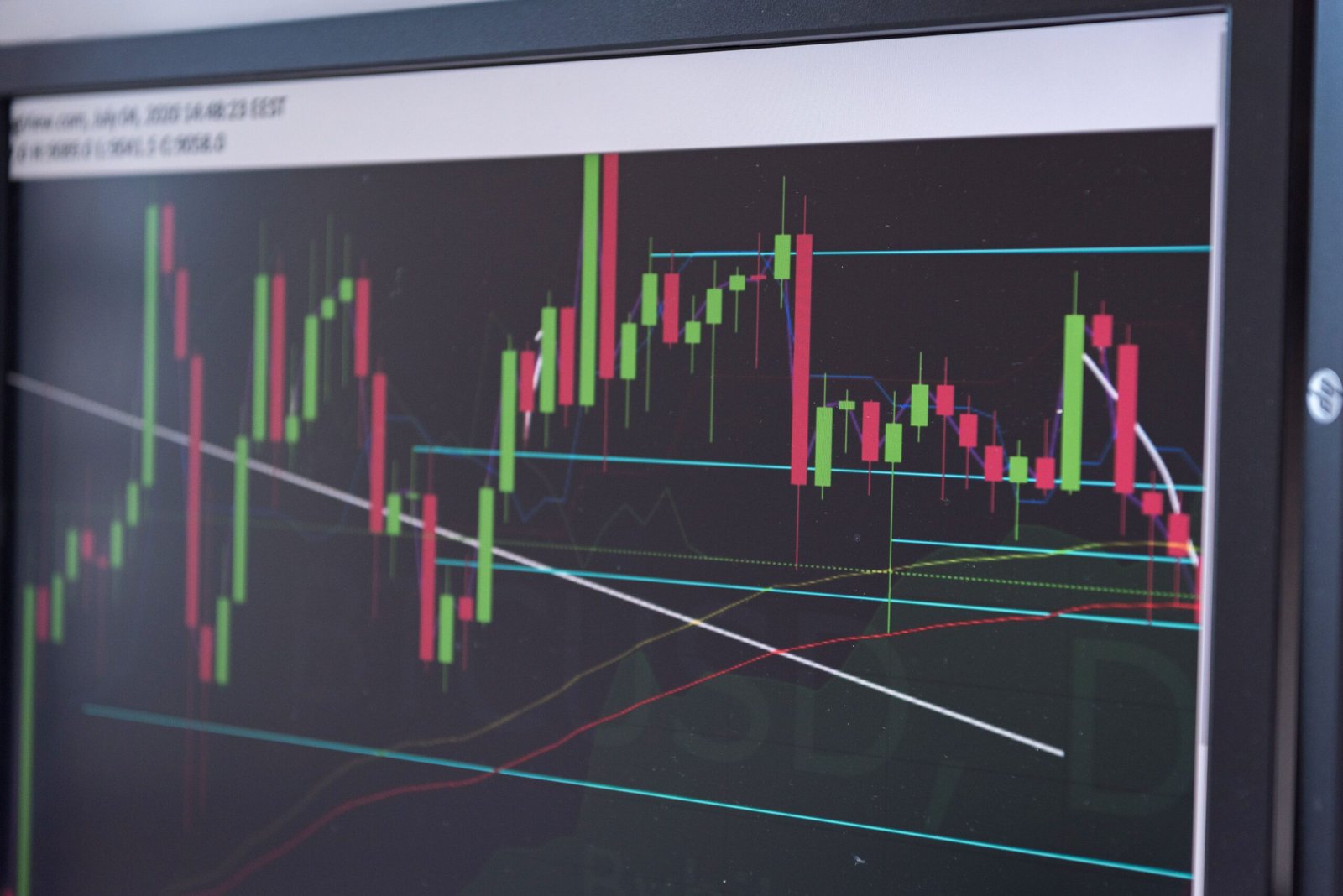
Because flows now drive so much of the weekly price action, following them is more useful than following price commentary. The data is published daily and free, tracked by providers such as SoSoValue and Farside Investors, and reported by most crypto news outlets.
Four things worth knowing when you look at it.
Streaks matter more than single days. One day of outflows means almost nothing — a single institution rebalancing can dominate the number. Five or ten consecutive sessions in the same direction is a pattern, and it’s the pattern that translates into sustained buying or selling pressure on the spot market.
Watch the dominant fund specifically. Because BlackRock’s IBIT accounts for such a large share of the category, its direction is the signal and the smaller funds are largely noise. When the category is positive but IBIT is negative, that’s a weaker recovery than the headline suggests.
Separate fee migration from real flows. Grayscale’s long-running redemptions are substantially about investors moving to cheaper funds, not about leaving Bitcoin. If you count that as bearish sentiment, you’ll misread the picture. Look at net flows across all funds rather than any single outflow figure.
Flows lag decisions. What you see today reflects allocation choices made days or weeks earlier at institutional desks. The data tells you what happened, not what’s about to. It’s a confirmation tool, not a prediction tool — and anyone presenting it as the latter is overreaching.
The honest use of this data is as context. It explains why the price did what it did, which is genuinely valuable when the alternative explanation on offer is usually someone’s narrative about sentiment or adoption.
ETF or direct ownership?
There isn’t a universal answer, but the split is usually clean.
An ETF suits you if you want price exposure inside a retirement or tax-advantaged account, you’re uncomfortable with self-custody, you value administrative simplicity, or you’re allocating a small percentage of a diversified portfolio.
Direct ownership suits you if you want to avoid ongoing fees on a long hold, you want to actually use Bitcoin, you’re comfortable with key management, or you specifically want an asset outside the traditional financial system.
Plenty of people hold both. If you go the direct route, the operational side matters more than the investment thesis — our guide to crypto wallets for beginners covers getting that right before it matters.
Access outside the United States
United Kingdom. The FCA has restricted retail access to crypto exchange-traded products, though rules have been under active review. Professional investors have had broader access than retail.
Canada. Ahead of the US here — Canadian spot Bitcoin ETFs launched in 2021 and trade on the Toronto Stock Exchange, available in registered accounts.
Australia. Spot Bitcoin ETFs trade on local exchanges, accessible through standard brokerage and some superannuation structures.
Europe. Exchange-traded products rather than true ETFs, due to fund diversification rules — economically similar, structurally different, and the distinction can matter for tax.
Check the tax treatment where you live before assuming an ETF is simpler than direct ownership. Sometimes it isn’t. The SEC’s Investor.gov is a useful starting point for understanding how these products are structured and regulated.
Frequently asked questions
Do ETF outflows mean institutions are abandoning Bitcoin?
Not necessarily. Redemptions concentrated in a wrapper while direct holders accumulate looks more like rotation between vehicles than wholesale exit. It’s also a small fraction of total assets held.
Can a Bitcoin ETF go to zero if the issuer fails?
The Bitcoin is held by a separate custodian, not the issuer, so issuer failure shouldn’t destroy the assets. Custodian failure is the more relevant risk, and it’s concentrated — most major US funds use the same custodian.
Why does IBIT matter so much?
Because it’s large enough that its flows move the category, and the category moves the price. It functions as the bellwether.
Are ETF fees worth it?
Depends on your holding period and what you’re avoiding. For someone who would otherwise risk losing their keys, the fee buys real insurance. For a decade-long holder confident in self-custody, it’s a meaningful drag.
The bottom line
Spot Bitcoin ETFs did what they promised — they made Bitcoin accessible to money that couldn’t touch it before. What wasn’t advertised is that they also built a transmission channel running from institutional allocation decisions directly into Bitcoin’s spot price.
In 2024 and 2025 that channel pointed one way and everyone celebrated. In 2026 it reversed, and the same structure that amplified the rise amplified the fall. Anyone holding Bitcoin — in an ETF or not — now has a reason to watch daily flow data that didn’t exist three years ago.
For the wider picture on this year’s decline, see our breakdown of why Bitcoin is down in 2026, and our longer-term view on whether Bitcoin still works as a long-term holding.
Sources
- SEC — spot Bitcoin ETF approvals, structure and creation/redemption mechanics
- SEC Investor.gov — how ETFs work and what redemptions mean for the underlying asset
- Federal Reserve — the rate environment shaping institutional allocation decisions
Flow figures and the estimate that ETF flows explain a large share of weekly price movement come from third-party research and fund reporting, not from an official regulatory source. Treat the percentage as an estimate rather than a measured constant.
Last reviewed: 15 August 2026. ETF flows change weekly — figures here are a snapshot.
Information only, not investment advice. Flow figures are as reported in 2026 and change daily; fund availability and tax treatment vary by country. Cryptocurrency is highly volatile and you can lose your entire investment.